Surgery on the calendar? We'll tell you exactly what to buy.
VerifiedCareData checks every recovery-equipment pick against Medicare's own device records, federal recall databases, and a live product listing — not star ratings, not a retailer's marketing copy, and nothing made up to fill a page. We built it for the weeks right before surgery, when you're trying to get the house ready and don't have time to sort good advice from guesses. Pick your surgery below and we'll tell you exactly what to buy, what Medicare (or your FSA/HSA) actually pays for, and what's safe to borrow instead.
What surgery are you getting ready for?
Forty guides, same standard: exact products (not vague categories), a free printable checklist, and an honest coverage story — Medicare, FSA/HSA, or neither, whichever actually applies. Here are the 8 we get asked about most, measured by search demand, not a guess.
Hip Replacement
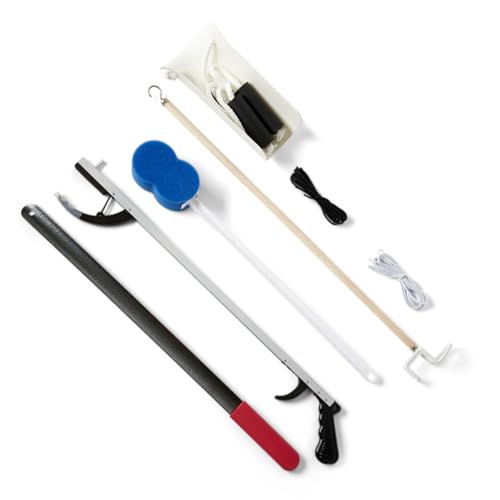
Many surgeons still ask you to avoid bending your hip much past a right angle, crossing your legs, or twisting your leg inward for weeks — the hip kit is built around exactly that.
Knee Replacement
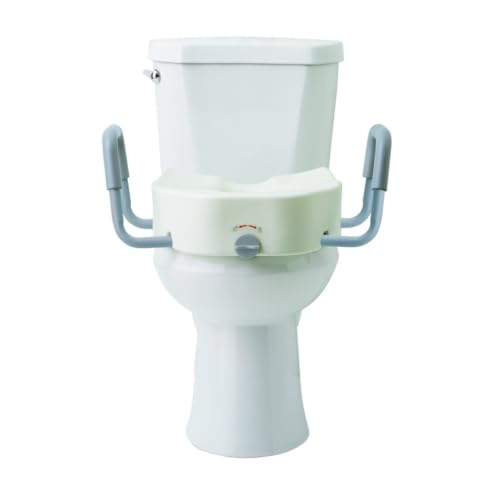
For about two weeks your knee won't bend far enough for stairs, socks, or a normal toilet — these six get your house ready first.
Cataract Surgery
Your eyes will be light-sensitive and eye drops will get hard to manage for weeks — and Medicare covers exactly one pair of glasses afterward, never the prescription sunglasses recovery actually calls for.
Hernia Surgery
Bracing a cough, keeping swelling down, and not bending to reach the floor — and only one item on this checklist carries a Medicare billing code at all, which pays $0, by law.
Hysterectomy
Recovery depends on which of three surgical routes you have — lift limits alone range from about 8 to 15 pounds for 3 to 6 weeks, depending on the source and the route.
Shoulder Surgery
Your sling is free from the hospital. What isn't: sleeping flat on your back for the first time in years, which is what the sleep wedge is really for.
Wisdom Teeth
Genuinely just two things worth buying ahead of time — most checklists for this are padded, and this one isn't. Medicare calls this exact procedure a textbook example of what it won't pay for; the IRS names it by name as FSA/HSA eligible.
Shoulder Replacement
Nearly the same basket as rotator cuff repair, because the equipment need really is the same — what's different here is who's having this surgery and how Medicare handles it.
Browse the rest by what's healing
The other 32 guides, grouped by body area so it's easier to scan than one long list.
Joint & bone
More orthopedic recoveries, beyond the two joint replacements above.
Back Surgery
No bending, lifting, or twisting for weeks — and UW Medicine's own hospital-bag instructions say skip the slip-on shoes, not buy them.
Foot & Ankle Surgery
Medicare pays $57–89 toward a pair of crutches for weeks of staying off your foot — and zero toward the knee scooter that does the identical job.
Bunion Surgery
Three essentials that apply no matter which surgical technique you had — a post-op shoe federal law excludes from Medicare by name, not just missing from the data — plus crutches or a scooter if you're off your foot for weeks.
Meniscus Surgery
Four things cover everyone regardless of what your surgeon actually did inside your knee — whether you need a fifth, a hinged brace, depends on one question they can answer in a sentence: stitched, or just trimmed?
ACL & Knee Arthroscopy
Three things everyone needs — crutches, ice, a leg-elevation pillow. Whether you need a fourth and fifth, a hinged knee brace and compression stockings, depends on one question your surgeon can answer in a sentence: was anything inside your knee stitched, or just trimmed?
Carpal Tunnel Surgery
Genuinely just 2 essentials — and the 2024 AAOS guideline says something most pages get wrong: routine splinting after surgery isn't well-supported by evidence. The splint's real job is easing symptoms before surgery, not bracing you after it.
Broken Bone / Cast
Not a single-surgery hub — an evergreen cast guide that splits by location: crutches and a waterproof cover for a leg cast, just the cover (plus a strap if you got a sling) for an arm. Cast itch is answered with 4 free hospital-named tricks, not a gadget.
Hip Fracture Surgery (ORIF)
There's no time to shop before this one — surgery usually happens within 36 hours of the fall, and it's often a family member doing the shopping, not the patient. 80.3% of patients are discharged to a rehab facility, not home.
Elbow Surgery
Two things to buy, one that's free — the rest depends which of 5 elbow surgeries you had. Total elbow replacement carries a permanent 5–10 lb lifting cap for life; the other four don't.
Spinal Cord Stimulator
A genuine two-stage surgery — a short trial, then, only if that works, the permanent implant — with different gear for each stage, and the Medicare rule (NCD 160.7) that makes the trial a condition of payment.
Abdominal & digestive
Belly-and-gut surgeries — beyond the inguinal/groin hernia hub above.
Hiatal Hernia Surgery
A different kind of recovery than most on this site — weeks of blended meals and sleeping elevated while your fundoplication heals, not a mobility-equipment list.
Gallbladder Surgery
The honest list here is almost nothing — one cold pack, about $21 — while Medicare's own policy calls a raised toilet seat noncovered by name but pays for a bedside commode with a doctor's order.
Colorectal Surgery & Ostomy
Four things if you have a new stoma, one more either way — and Medicare's coverage runs backwards from what you'd guess: it actually prices the support belt and the odor drops, but has no code at all for the fabric pouch cover.
Appendectomy
There's no time to shop before an emergency appendectomy — this is the post-discharge list. Two things cover almost everyone; a third only matters if your surgery was open, not laparoscopic.
Bariatric Surgery
Gastric sleeve or gastric bypass — one hub for both, because the hospitals that publish these guides treat them as one staged recovery, not two. Straws are a real, unconditional no here.
Women's & newborn
Childbirth and gynecologic/breast recoveries.
C-Section
1 in 3 U.S. births is a c-section, and every cough, laugh, or seatbelt pulls straight across that incision — 5 of these 6 essentials are FSA/HSA eligible without a doctor’s note.
Vaginal Birth Recovery
There's no incision and no operating-room date to count down to — just a due date. Hospitals hand out the same five comfort items to almost everyone, and four of the five are FSA/HSA eligible without a doctor's note.
Mastectomy
Medicare actually covers the bra on this list — a real billing code, priced at $59.59 — the one hub on this site where that's true.
Lumpectomy
Genuinely just 2 essentials, about $31 — and ice belongs on this list, the opposite of this site's own mastectomy hub's no-ice rule, per four independent hospital sources.
Everything else
Heart, eye, dental, cosmetic, and urologic recoveries.
Heart Surgery
A cough pushes about 60 pounds of pressure against a healing sternum — which is why hugging a pillow through every cough or sneeze is on the hospital’s own precautions sheet.
LASIK
Medicare has excluded LASIK from coverage since 1997, twice over — once as a substitute for glasses, once as cosmetic surgery — but the IRS names it by name as a deductible expense, which is exactly what makes it FSA/HSA eligible.
Facelift
The single most-repeated instruction across every hospital source is technically free — elevate your head, ice water on a washcloth — for surgery Medicare excludes by federal statute and the IRS excludes from FSA/HSA by name.
Dental Implant
The same 3-item first-week basket as our wisdom-teeth checklist, stated honestly — what's different is a months-long healing wait, and CMS's own rulemaking naming a dental implant as what still isn't covered.
Prostatectomy
Medicare prices and pays for the catheter, both drainage bags, and the strap — then, in that same coverage policy, names the incontinence pads it won't cover as "not prosthetic devices."
TURP Surgery
Most people need almost nothing — four independent hospital sources agree the catheter usually comes out in the hospital, not at home. A conditional kit for the smaller group who are the exception.
Tonsillectomy
Chosen for whoever's doing the shopping, usually a parent. Hospitals genuinely disagree on straws — one says fine, one says it raises bleeding risk — shown side by side, not averaged into one rule.
Pacemaker / ICD Implant
The shortest checklist on the site. Unlike knee or hip replacement, this doesn't restrict your legs at all — you're walking the same day. The one thing worth buying: a seatbelt pillow, because the diagonal strap crosses right over the incision.
Thyroid Surgery
From seven hospital discharge sources — plus one symptom pattern five independent hospitals name identically (numbness or tingling in the fingers, face, or lips) as the reason to call your surgeon.
Cardiac Ablation
One product, about $21 — the thinnest checklist on the site alongside pacemaker/ICD. A groin-access procedure with a leg restriction, not the arm restriction pacemaker/ICD causes, plus a genuinely new 2026 Medicare billing-site change.
Septoplasty
2 essentials, about $53, from 9 hospital and government sources — plus the honest coverage line: it's function vs. appearance that decides coverage, not septoplasty vs. rhinoplasty.
Mohs Surgery
As little as $7, up to about $92 depending on your surgery site and timing — the real story is the wait, not the shopping: this runs in unpredictable multi-hour stages while a pathologist checks each layer of tissue removed.
Tummy Tuck
5 essentials, about $130–140 — plus an honest three-hospital disagreement on how long you'll actually wear the binder (2 weeks to 6+), and the panniculectomy coverage boundary that sits close by.
How we verify every pick
Every product on this site goes through the same four checks before it makes a list. We start with Medicare's own device classification registry to see how a category is actually built and coded, then check Medicare's fee schedule to know what it pays for, if anything. We run every pick against federal recall databases from the CPSC and the FDA, and we verify the price, photo, and specs against a live product listing, not a stock catalog. If a pick fails any one of those four checks, it doesn't make the list — see exactly how on our methodology page →.
Medicare's fee for a folding wheeled walker (HCPCS E0143) is $55.55–$125.91, and suppliers billed it 508,460 times nationally in 2024 — about $24.1M total, the single highest-volume code on our knee-replacement checklist.
That's DY2024 data, the most recent year CMS has published as of this July 2026 check — utilization data runs about 1.5 years behind the current date, so treat it as the latest available, not real-time.
Source: CMS DMEPOS Fee Schedule, July 2026 (DME26-C) + CMS DMEPOS utilization by Geography/Service, DY2024