Tonsillectomy Recovery: What to Expect, Day by Day

It does not get steadily better. Pain rises again around day three, and the scab comes away around day seven — which is why the second week catches families out.

Most tonsillectomy shopping lists are written as if recovery is a fortnight of steadily improving sore throat. The published healing research describes something different, and knowing it changes what you buy and when you use it: the wound is at its most inflamed around days three to five, and the clot over it separates about a week after surgery. Three things cover what actually gets difficult — the pain, a dry room at night, and getting enough fluid in. Plan on roughly $50–55 for all three.

The fact

Serial photography of healing tonsillectomy wounds found that pain measures rise again on postoperative days 3 to 5, at maximal wound inflammation, and that the fibrin clot separates about 7 days after surgery, exposing vascular tissue underneath.

That is the shape of the fortnight in one sentence, and it is why a family told ‘the first few days are the worst’ can be badly frightened in week two. Pain falling and then rising again is described in the research as the expected pattern.

Source: Isaacson G, Tonsillectomy healing, Annals of Otology, Rhinology & Laryngology (2012), PMID 23130538

Every pick here is checked against named hospital discharge instructions, published outcome research, and this site’s own recall data — how we choose →

Before surgery: fill the freezer

Almost everything useful here is cold, soft or wet. Buy it while you still have time to think.

The two things worth having in the house before you go in are a way to make cold things and a way to hold cold against a throat without holding it. Everything else can be ordered later; these two get used from the first evening.

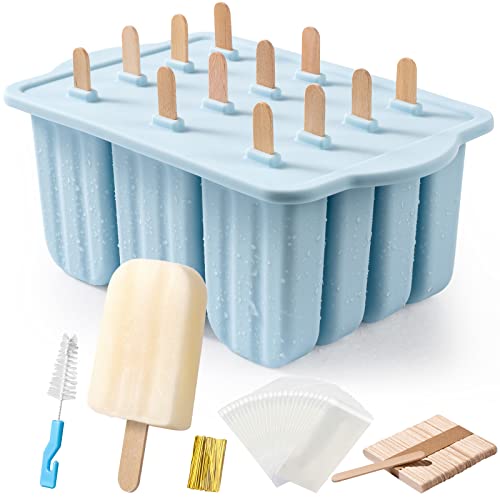
MEETRUE 12-Piece Silicone Popsicle Molds with Sticks

Because cold, soft, and sweet is what a raw throat wants — and a reusable mold beats buying boxes of popsicles for two weeks.

Popsicle molds (silicone, reusable)

MEETRUE 12-Piece Silicone Popsicle Molds with Sticks

Equipment, not a diet plan — a 12-cavity reusable mold, dishwasher-safe, with sticks and a cleaning brush included.

  • UNC Otolaryngology names cold, soft foods directly: "Start with soft foods like ice cream and Jell-O for 10 days after surgery and then introduce your child’s other favorite foods as they will tolerate them."
  • A reusable mold lets a family make their own flavors and ingredients over a 2-week recovery — cheaper per-serving than store-bought boxes, and this site isn’t authoring a recipe or diet plan here, just naming the tool.
  • Dishwasher-safe, BPA-free, 50 sticks and a cleaning brush included.

One flaw (not a dealbreaker): One safety instruction worth knowing before you pick flavors: UC Davis Children’s Hospital specifically says, "We recommend avoiding all red-colored beverages or popsicles" — not a taste preference, but so a parent can tell red dye from blood if a child vomits. Worth following even though it isn’t this site’s own idea.

Hilph Wisdom Teeth Ice Pack Head Wrap

Because a bag of ice and a towel works — but two weeks of holding a towel in place gets old fast, for a kid or an adult.

The ice collar

Hilph Wisdom Teeth Ice Pack Head Wrap

A head/chin wrap, not a plain neck band — drapes toward the neck and throat, and its own Amazon listing already names this exact surgery.

  • UNC Otolaryngology (UNC Health): "An ice collar can also be helpful for post-operative sore throat. Make this by placing ice cubes and water in a large Zip-Loc bag and wrapping it in a towel."
  • Memorial Hermann: "You can use cool compresses or ice packs on your child’s neck to help your child feel more comfortable" — a second, independent hospital source for the same cold-therapy recommendation.
  • Ships with 4 gel packs, not 1 — one’s in the freezer while the other’s on your face or neck.

The count: Reused from this site's wisdom-teeth hub research — its own live Amazon listing title literally reads “Pain Relief for TMJ, Tonsillectomy, Wisdom Teeth Recovery,” a genuine cross-procedure fit, not a forced reuse.

One flaw (not a dealbreaker): Marketed for the jaw/cheek more than the throat specifically — the UNC and Memorial Hermann instructions describe a DIY zip-loc-and-towel collar; this hands-free version covers the same area without holding anything in place.

Days 1 and 2: cold, and fluids

Sore, but usually the part families are prepared for.

Swelling and pain are at their highest immediately after surgery — the healing study attributes that to the thermal effect of the operation itself and the inflammatory response that follows. Every hospital discharge sheet we checked puts fluid intake ahead of everything else in these two days, ahead of eating and ahead of pain relief.

The reason a marked bottle helps is not that it holds more. It is that after a general anaesthetic, with a sore throat, nobody — adult or child — can reliably tell you how much they have drunk today.

Hyeta 32oz Water Bottle with Straw & Time Marker

Because every hospital source we checked names hydration as the single most important recovery factor — not pain control, not diet, hydration.

The hydration bottle

Hyeta 32oz Water Bottle with Straw & Time Marker

Hourly time markers give a visual hydration target — the straw lid is optional, and hospitals genuinely disagree on whether to use it.

  • UNC Otolaryngology: "The most important factor in helping speed recovery after surgery is staying hydrated. It is very important to make sure your child is drinking after the procedure."
  • Memorial Hermann: "The most important thing for your child to have in the first three days after surgery is liquids."
  • UC Davis Children’s Hospital, independently: "Drinking plenty of fluids (water, juice) after surgery is very important!"

The count: Price re-verified live via this site's calibrated checker on 2026-08-05: this morning's site-wide 144-pick audit and the original research doc both had this ASIN at $9.99 — a fresh live check during this build returned $16.99, buybox-scoped, LIVE and in stock. Treated as a genuine same-day price move, not an error, and corrected on this page.

One flaw (not a dealbreaker): The straw lid is genuinely NOT a settled call: UC Davis says "It is OK to use a straw." Memorial Hermann says a child "should not drink through a straw after surgery until the throat is completely healed because it may increase the risk of bleeding." We're not picking a side — use the straw lid only if your own discharge instructions say it's fine; otherwise sip from the open mouth of the bottle. Full breakdown, and how this differs from this site's other hubs' straw advice, on our bleeding-risk page →

Days 3 to 5: the part nobody warns you about

Pain rises again here. That is the documented pattern, not a complication.

This is the single most useful thing on this page. In the healing study, analog pain measures increase on postoperative days 3 to 5, matching the point of maximal wound inflammation in experimental models. Families who were told the first days are the worst often reach day four convinced something has gone wrong.

Nights are the hard part of this window, which is where a humidifier earns its place — not as a treatment, but because a dry room makes a raw throat worse for eight hours at a stretch. Referred ear pain is also commonly described at this stage; it comes from the same nerve supply and is not an ear infection. If you are worried about either, the number on your discharge sheet is the right call to make.

ROSEKM Small Cool Mist Humidifier for Bedroom (1.1L)

Because a dry bedroom makes a raw throat hurt more, all night, every night, for two weeks.

The cool-mist humidifier

ROSEKM Small Cool Mist Humidifier for Bedroom (1.1L)

Cool mist, not warm — no heated-water burn risk in a house with a groggy kid or a groggy adult moving around at night.

  • North Alabama ENT & Allergy, clinician-authored discharge sheet: "Please use a cool mist humidifier" and "Running a cool mist humidifier in the bedroom can help prevent dryness which can contribute to the pain level."
  • UC Davis Children’s Hospital independently recommends the generic form: "Consider using a humidifier at night to moisten the air."
  • 1.1L size fits a nightstand; auto shut-off when empty; filterless, so there’s no recurring filter to buy.

The count: Only one source found this pass (a private ENT practice, not a hospital) specifically names “cool mist” — the one hospital source that mentions humidifiers at all (UC Davis) uses the generic word. Disclosed honestly rather than overstated as a hospital-wide standard.

One flaw (not a dealbreaker): The cool-mist specificity is single-clinician-sourced, not hospital-corroborated — see the evidence line above. The general dryness-and-pain logic is what both sources agree on.

Bekweim Adjustable-Height Bed Wedge Pillow, 12 Inch

Because a few clinicians suggest sleeping with your head up for the first few nights — but this is the least-sourced pick on this page, so we're not overselling it.

Extra pillows for head elevation (optional)

Bekweim Adjustable-Height Bed Wedge Pillow, 12 Inch

A stack of ordinary pillows works for free — this is the buy-path if you can't hold a stable elevated position overnight.

  • Only one source found this pass (a private ENT practice’s checklist) recommends head elevation for tonsillectomy specifically — no hospital or academic source fetched this pass corroborates it.
  • Reused from this site’s shoulder-surgery research: a torso incline, not a leg-elevation wedge — raises the whole upper body at a steady angle instead of sliding by 3 a.m. like stacked pillows can.
  • No HCPCS code exists for this category — never billed as Medicare DME.

One flaw (not a dealbreaker): Single-source evidence, disclosed honestly: unlike this site's wisdom-teeth hub, which had a hospital citation for the identical pick, the only recommendation found for tonsillectomy specifically comes from one private-practice checklist, not a hospital or academic source. Skip this one first if you're budget-conscious — it's the softest evidence on the page.

Days 5 to 10: the scab separates

Nothing to buy for this stage. It is the one worth reading about anyway.

About a week after surgery the fibrin clot over the tonsil bed separates, exposing the vascular tissue beneath it before new lining covers it. Two things follow from that, both described in the healing research: the white patches in the throat that alarm people are the clot, not infection, and the risk of bleeding is concentrated in this window rather than spread evenly across the fortnight.

Some bleeding after tonsillectomy is common enough that every discharge sheet covers it, and it is the one thing on this page that is genuinely urgent. We are not going to tell you how to judge it — that is what the number on your discharge sheet is for, and it is worth putting that number somewhere you can find it at 2am before you need it.

What the published bleeding rates actually are →

The soft-food question, answered properly

The most common piece of tonsillectomy advice has been tested, and it does not do what people think.

Nearly every tonsillectomy list tells you to avoid crisps, toast and anything sharp, and implies that eating the wrong thing will make the wound bleed. That has been studied directly. A systematic review pooled eight studies covering 1,039 children, comparing those told to restrict their diet with those told to eat normally.

Bleeding occurred in 2.3% of the restricted-diet group and 0.8% of the unrestricted group — a difference that was not statistically significant (p = 0.12). The review’s own conclusion was that clinicians should not change the dietary advice they give.

Post-tonsillectomy dietary advice and haemorrhage risk: systematic review. International Journal of Pediatric Otorhinolaryngology, 2017. PMID 29224760

So soft, cold food is worth having — but for the honest reason rather than the frightening one. It is easier to swallow and it keeps fluid going in. That is why a popsicle mould is on this page and why it sits under “before surgery” rather than under a warning. Follow whatever your own surgeon told you; where their instruction and this evidence differ, theirs wins.

How we know this

Every recommendation above has to survive independent checks. None of them is our opinion.

  1. Medicare’s own data. Whether the item is covered, what it pays, and how many were billed nationally — from the CMS DMEPOS fee schedule, the HCPCS Level II file and DY2024 utilization, queried directly rather than through a third party’s summary. Published as an open dataset.
  2. Named hospital instructions. Clinical claims are quoted from a named institution’s own discharge or patient-education material and linked, never paraphrased into fact. Where sources disagree, the page says they disagree instead of picking one.
  3. Published outcome research. Three peer-reviewed sources carry the recovery timeline and the diet question on this page — a prospective healing study, a systematic review of 1,039 children, and a meta-analysis of 12 studies covering more than 15,000 patients. Every figure on this page that describes what happens during recovery — when pain rises, when the wound changes, what the evidence says about diet — comes from one of these, cited inline and linked to the paper rather than summarised from memory.

What that research is and is not. These are studies of what happens to patients after this operation — how the wound heals, how pain moves, what changes outcomes. They are not a substitute for your surgeon's instructions, and this page never tells you what treatment to have. Where a study's finding and your discharge sheet disagree, follow the discharge sheet and ask the question at your follow-up.

Our datasets are published under CC BY 4.0 — see the rest of our datasets. More about who writes this and how →

Go deeper

Two follow-up pages: the full bleeding-risk and straw breakdown, and the insurance frequency threshold most pages don't mention.

This is an equipment and cost-coverage guide, not medical advice. It doesn't cover pain management, what to eat beyond a hospital's own attributed instructions, or when to call your surgeon about bleeding — follow your own discharge instructions over anything here, and call your ENT's office (or go to the ER) for anything more than spitting or minor blood-tinged mucus.
See the full printable checklist — all 6 items ↓

Everything on this hub, in one list — the 3 essentials, the one household-dependent extra, the one honestly single-sourced bonus pick, and the borrow-or-skip section. This is what prints when you use the button up top.

The full tonsillectomy recovery checklist
ItemCategoryStatusMedicare/Insurance
Ice collar / cold-therapy wrap Essential Buy No HCPCS code
Cool-mist humidifier Essential Buy No HCPCS code
Hydration bottle (straw lid optional — see disagreement) Essential Buy No HCPCS code
Popsicle molds (reusable) Depends on household Buy if useful — optional No HCPCS code
Extra pillows / sleep wedge Bonus (single-sourced) Optional — free alternative works No HCPCS code
Chewing gum Borrow or skip Free grocery-aisle item n/a
Oral irrigation syringe Borrow or skip Not applicable to this surgery — skip n/a
What insurers actually check before approving surgery

Insurers commonly require documented proof of 7 or more throat infections in one year (or 5+ per year for two years, or 3+ per year for three years) before approving a tonsillectomy as medically necessary — the same threshold the AAO-HNS clinical guideline for children uses.

Unlike wisdom teeth, a tonsillectomy is billed as medical (not dental) surgery — there's no dental-exclusion carve-out to navigate. None of this hub's picks has a Medicare DME billing code.

Source: Geisinger Health Plan, Policy MP285 + AAFP's summary of the AAO-HNS 2011 clinical guideline

See the full coverage breakdown →

This page has Amazon links — we may earn a commission if you buy through them, at no extra cost to you. It never changes which product we recommend. See our methodology.

Sources

  1. Isaacson G. "Tonsillectomy healing." Annals of Otology, Rhinology & Laryngology, 2012 (PMID 23130538) — serial intraoral photography of healing wounds: pain measures rise again on postoperative days 3 to 5 at maximal inflammation, and the fibrin clot separates about 7 days after surgery, exposing vascular stroma
  2. "Post-tonsillectomy dietary advice and haemorrhage risk: systematic review." International Journal of Pediatric Otorhinolaryngology, 2017 (PMID 29224760) — eight studies, 1,039 children: bleeding in 2.3% on a restricted diet against 0.8% unrestricted, p = 0.12 — the basis for the soft-food section
  3. "Post-tonsillectomy ibuprofen: is there a dose-dependent bleeding risk?" The Laryngoscope, 2022 (PMID 34559405) — meta-analysis of 12 studies, more than 15,000 patients: no increased rate of post-tonsillectomy haemorrhage at either common ibuprofen dose
  4. StatPearls (NCBI Bookshelf, National Library of Medicine), "Tonsillectomy" — the 500,000+ annual pediatric-case figure; fetched live 2026-07-30. Covers children under 15 only — no all-ages or adult-specific total was found in any source fetched this pass.
  5. UNC Otolaryngology/Head and Neck Surgery (UNC Health), post-operative care instructions following tonsillectomy — ice-collar recipe, hydration-is-the-most-important-factor, soft-food timeline, and chewing-gum tip; fetched live 2026-07-30
  6. UC Davis Children's Hospital, Tonsillectomy home-care patient education — the day-5-to-10 / 14-day bleeding-risk window, the straw-is-OK guidance, the red-popsicle safety instruction, and the generic humidifier mention; fetched live 2026-07-30
  7. Memorial Hermann Health System, pediatric tonsillitis patient page — the opposing straw guidance, the independent day-5-to-10 bleeding window, cold-compress/ice-pack citation, and hydration citation; fetched live 2026-07-30
  8. North Alabama ENT & Allergy, post-op tonsillectomy/adenoidectomy instructions (clinician-authored, private practice) — the cool-mist-specific humidifier instruction; fetched live 2026-07-30
  9. David & Eldredge ENT, adult-specific post-op tonsillectomy/adenoidectomy instructions (clinician-authored, private practice) — the adult-specific referred-ear-pain (days 3-5), sore-throat-duration, and ~2-week-recovery citations used in the adult-recovery callout; fetched live 2026-07-30
  10. Geisinger Health Plan, Policy MP285 (Tonsillectomy) — the 7/5/3 documented-infection-frequency medical-necessity threshold; fetched live 2026-07-30 — full detail on the coverage spoke
  11. data/coverage_status.json (68 HCPCS codes) + data/dmecs_products.json + data/recalls.json — keyword-scanned for humidifier/tonsil/popsicle/water bottle/straw — zero hits; confirms this hub has no DME angle
  12. Amazon product-page live verification (scripts/verify_asin.py, curl + mobile Safari UA) — all 5 placed ASINs re-verified LIVE/In Stock 2026-08-05; caught one real price drift on the hydration bottle ($9.99 -> $16.99) — see that card above
  13. VerifiedCareData dataset.json (CC-BY-4.0) — every coverage fact above in one machine-readable endpoint