What to Buy Before Hernia Surgery: The 5 Essentials

Five things for afterwards, and one question worth asking before. Everyone worries about the hernia coming back — but that is now the uncommon problem, and the common one is barely mentioned to patients at all.

Inguinal hernia repair is one of the most performed operations on earth — around 700,000 a year in the United States alone, and a lifetime incidence of 27% in men. The recovery kit is short and genuinely useful. But the thing most worth knowing takes five minutes to read and has to be read before the operation, not after.

Every pick here is checked against named hospital instructions and the published trial evidence — how we choose →

Before surgery

One item people ask about constantly, and the honest answer about it.

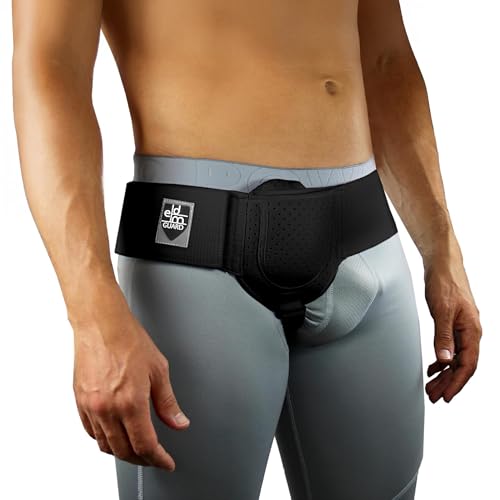
Everyday Medical Inguinal Hernia Belt for Men & Women - Post Surgery Groin Hernia Truss for Left/Right Side, Adjustable Inguinal Hernia Support Belt w/Compression Pad

Because a bulge that aches every time you stand or lift is a long wait if your surgery date is still weeks away.

Hernia belt / truss (pre-op, doctor-conditional)

Everyday Medical Inguinal Hernia Belt

Holds the hernia in with a removable compression pad — symptom relief while you wait, not a treatment.

  • Washington University's own surgery department, verbatim: "Your doctor might recommend using a hernia belt, truss or brace as a 'bridge' to surgery... you can wear the garment to provide symptom relief until it is time for hernia repair surgery."
  • SAGES (the U.S. surgical specialty society for GI/laparoscopic surgery) independently confirms the same use case: a truss when "elective surgery is not the best decision" right now.
  • Removable compression pad works for either the left or right side, sized to hip circumference.

One flaw (not a dealbreaker): Relief lasts only as long as you're wearing it. WashU's own page is blunt about it: "the bulge and pain typically returns shortly after you remove the garment." This does not fix a hernia — only surgery does.

Also available: budget alternative, same left/right-adjustable design ($24.29)

The 5 essentials

D. Cozy Hysterectomy Pillow Abdominal Surgery Seatbelt Pillows with Pocket, C-Section Recovery

Because coughing, sneezing, or laughing right over a fresh incision is one of the sharpest early moments patients describe.

The cough-splint pillow

D. Cozy Abdominal Surgery Seatbelt & Incision Pillow

Hold it against your incision before you cough or sneeze — hospitals call this splinting, and it genuinely helps.

  • Columbia Hernia Center's own hernia-surgery checklist names this exact move: "A small pillow to hold against your abdomen when you cough or sneeze (this really helps)."
  • Zippered side lets you adjust the stuffing to fit your body and how firm you want it.
  • Doubles as a seatbelt shield for the car ride home — a lap belt crosses directly over most hernia-repair incisions.

The count: We checked 2 seatbelt/incision-shield pillows on file for this hub; this D. Cozy pick has a live-confirmed product image and a side zipper for adjustable firmness the HapiPoppy alternative doesn't have.

One flaw (not a dealbreaker): Marketed for hysterectomy and C-section recovery, not hernia surgery by name — the job (a firm cushion against an abdominal incision) is identical, but don't expect hernia-specific packaging.

Also good: HapiPoppy version with a built-in ice/heat pack pocket ($19.99)

Lansinoh Hot and Cold Postpartum Pads, Reusable Perineal Ice Packs for Postpartum Recovery, 2 Count

Because Columbia gives everyone the same window: ice for the first two to three days, no exceptions.

The ice packs

Lansinoh Hot and Cold Postpartum Pads (2-Pack)

Thin, flexible gel packs that sit against your incision — not a bulky knee-shaped wrap that doesn't fit here.

  • Columbia Hernia Center, verbatim: "Ice packs: Use these for the first 48 to 72 hours to reduce swelling and numb discomfort. Gel packs that can be refrozen are most convenient."
  • Thin and flexible enough to sit against a groin or abdominal incision — the knee-contoured gel pack this site's joint-replacement hubs use is the wrong shape for this surgery.
  • Reusable, freeze-and-swap — nothing to plug in or break.

The count: We deliberately did not reuse the knee-shaped gel pack this site's other hubs use for ice therapy — checked this flat, flexible pack against it directly and picked the shape that actually matches a groin or abdominal incision, the same shape-mismatch call the hip and c-section hubs made for their own incision locations.

One flaw (not a dealbreaker): Only two packs in the box — buy a second set if you want one always in the freezer while the other's in use.

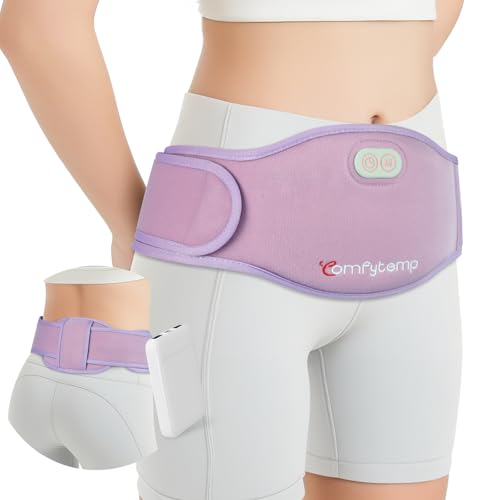
Comfytemp Portable Belly and Back Heating Pad, Cordless, Rechargeable

Because heat helps once swelling settles — but Columbia's own instructions are specific about when, and where, not to use it.

The heating pad

Comfytemp Portable Belly and Back Heating Pad

Cordless, wraps around your waist — but never directly on the incision itself.

  • Columbia Hernia Center, verbatim: "Heating pads: After the initial swelling subsides, heat can help relax sore abdominal muscles and ease spasms. Do not use heat directly on incisions."
  • Cordless and rechargeable — no cord to manage while you're up and moving.
  • 3 heat levels with a 15/30/45-minute auto-shutoff timer, so you can't fall asleep with it running.

The count: One of two cordless belly heating pads verified on file for this hub — this Comfytemp pick has a live-confirmed product listing; the $14-cheaper Yeamon alternative below has the identical auto-shutoff safety feature.

One flaw (not a dealbreaker): This is a 'once swelling subsides' item, not a day-one purchase — Columbia's own sequencing puts ice first, heat only after the first few days.

Also good for less: Yeamon cordless heating belt ($21.99)

HealthSmart Enhanced Comfort 5" Raised (Round) Toilet Seat Riser

Because getting on and off the toilet uses your abdominal muscles directly — the exact muscle group your repair needs to rest.

The raised toilet seat

HealthSmart Raised Toilet Seat Riser (Round Bowl)

A straightforward height boost that cuts down how far you have to lower yourself onto the seat.

  • Columbia Hernia Center, verbatim: "Raised toilet seat: Getting on and off the toilet requires using your abdominal muscles. A raised seat reduces how far you need to lower yourself, making bathroom trips much more comfortable."
  • Fits round bowls specifically — check your bowl shape before ordering (30 seconds with a tape measure); an elongated-bowl version exists too.
  • 300 lb. weight cap, no tools needed, rests on the existing bowl rim.

The count: Of the five raised-seat options verified on this site, we picked the round-bowl riser here rather than the locking universal model other hubs feature — that pick's own listing showed a stock gap on a recent build's live re-check, so we're linking a currently-verified, fitment-safe pick instead.

One flaw (not a dealbreaker): Bowl-shape-specific — the wrong one won't seat correctly. The elongated-bowl version is a separate SKU, not a switch on this one.

Also available: elongated-bowl version, check your bowl shape first ($38.39)

See the full raised-toilet-seat comparison →

Blue Jay 32" Reacher Grabber Tool for Seniors, 2 Pack - Sturdy Non-Folding Pick Up Stick with Magnetic Tip

Because bending down to pick something off the floor is exactly the strain your surgeon will tell you to avoid in the first weeks.

The reacher

Blue Jay 32" Reacher (2-Pack)

Non-folding shaft with a magnetic tip — sturdy enough to actually hold weight, not just look like it can.

  • Columbia Hernia Center, verbatim: "Grabber tool: A long handled grabber lets you pick up items from the floor, reach things on high shelves, and retrieve dropped objects without bending or straining."
  • Non-folding, rigid shaft — a weak folding jaw is the most common reacher complaint in recovery-forum feedback across this site's other hubs.
  • Two in the pack: one downstairs, one up, so you're never carrying one between floors.

The count: This site also verifies a 7-piece hip-kit bundle (reacher plus sock aid, shoehorn, and dressing stick) built for hip and knee surgery's specific can't-bend-the-joint problem. Hernia recovery doesn't have that same joint-bend limitation, so the standalone reacher is the honest pick here — not the bundle, which would pad the cart with pieces this recovery doesn't need.

The problem nobody mentions before surgery

Nothing to buy. Recurrence is the fear everyone arrives with; this is the one the numbers actually support.

Ask anyone what can go wrong with a hernia repair and they will say it comes back. Modern mesh repair made that uncommon. What replaced it as the main long-term problem gets almost no airtime in patient-facing material, which is strange, because it is far more likely to happen to you.

The finding this page is built on

Chronic postoperative inguinal pain — groin pain still present more than three months after the repair — affects 10% to 15% of the roughly 700,000 Americans who have inguinal hernia surgery each year. That is somewhere between one in ten and one in seven.

It is not evenly distributed, and the biggest lever is chosen before you go in. An overview of 21 systematic reviews of randomised trials found laparoscopic repair carried a 26% to 46% lower risk of chronic groin pain than open repair — with no evidence of any difference in recurrence between the two. The approach changes the outcome people are not warned about, and costs nothing on the outcome they are.

Source: Management of Chronic Postoperative Inguinal Pain (2023), PMID 37709394; Open versus laparoscopic repair of inguinal hernia, an overview of systematic reviews (2022), PMID 35286471

What to do with that. Not to demand a particular technique — plenty of hernias cannot be done laparoscopically, emergency and recurrent repairs change the calculus entirely, and a surgeon doing the operation they do best beats a technique picked off a webpage. But it is a fair and specific question at the consultation: which approach are you planning, and what is your own rate of lasting groin pain? Surgeons who do a lot of these track it.

And if it happens to you. The most useful thing to know is that pain at four months is not something to endure quietly until it becomes permanent. The clinical literature is clear that most chronic inguinal pain is first managed without further surgery — medication, physiotherapy, nerve blocks and pain-management approaches — and that the operations kept in reserve for it work when those fail. Persistent groin pain past three months is a reason to go back to your surgeon and say so plainly, rather than assuming it is simply how you heal now.

Depends on your repair type

Two more, conditional on whether your repair is a routine inguinal (groin) hernia or a larger umbilical/ventral one.

Frida Mom Belly Binder, Postpartum Essentials for Natural and C-Section Recovery, Adjustable Compression Wrap, After Birth Brace, Abdominal Band, 9" High

Because a larger abdominal-wall repair needs real support while it heals — but Columbia is honest that not everyone needs one.

Abdominal binder (ventral/umbilical repairs — not routine inguinal)

Frida Mom Belly Binder

A wide compression wrap for larger repairs — ask your surgeon before buying, this isn't a routine-inguinal item.

  • Columbia Hernia Center, verbatim: "For larger abdominal wall surgeries, your surgeon may recommend or provide an abdominal binder... Not every hernia surgery requires a binder, so ask your surgeon."
  • University Hospitals' own laparoscopic ventral hernia instructions give the most specific citation found: "We ask you to wear your abdominal binder for the first 6 weeks... including while sleeping... it is also important to reduce the fluid that accumulates above the mesh."
  • Three-point adjustable strap design, fits waist sizes 29"-46".

One flaw (not a dealbreaker): Not the same product as the hernia belt/truss above — a binder is a post-op abdominal-wall support wrap; a truss is a pre-op groin symptom-relief item. Don't confuse the two.

HOMBYS Leg Elevation Pillow for After Surgery, Knee Replacement & Recovery

Because sitting up out of bed strains the same muscles your repair needs to rest — this is the workaround.

Wedge pillow (sleep slightly elevated)

HOMBYS Leg Elevation Pillow

Columbia's own checklist names this as a comfort option many patients use, not a required item.

  • Columbia Hernia Center, verbatim: "A wedge pillow if you want to sleep slightly elevated... Many patients find sleeping slightly propped up is more comfortable."
  • 27" × 11.6" × 9" wedge — fits most beds and couches.

Bonus comfort

One more people mention, worth the few dollars.

Xpand No Tie Elastic Shoe Laces for Sneakers

Because bending down to tie a shoe is exactly the motion your repair can't do yet.

Slip-on shoes / elastic laces

Xpand No-Tie Elastic Shoelaces

Turns any lace-up shoe into a slip-on — no bending to tie.

  • Columbia Hernia Center, verbatim: "Slip on shoes or slippers so you do not have to bend to tie laces."
  • One pack fits most standard sneaker eyelets — keeps your existing shoes.

Borrow or skip

The honesty section — what this recovery doesn't need, according to the hospitals themselves.

  • Borrow a recliner if someone offers one. Columbia's own checklist names a recliner as more comfortable than a bed for the first days — don't buy one just for this recovery.
  • Restock basic first aid — gauze, tape, antibacterial ointment. Columbia recommends having extras on hand, but these are generic pharmacy items, not a dedicated product on this site.
  • Ask your surgeon or pharmacist about a stool softener. Straining during constipation is a real, hospital-flagged concern after abdominal surgery — but this site doesn't recommend a specific over-the-counter medication; that call is between you and your care team.
  • Don't buy a hernia belt as a substitute for surgery. Every source above agrees: it manages symptoms while you wait for a date, it doesn't fix anything, and the relief stops the moment you take it off.

How we know this

Every recommendation above has to survive independent checks. None of them is our opinion.

  1. Medicare’s own data. Whether the item is covered, what it pays, and how many were billed nationally — from the CMS DMEPOS fee schedule, the HCPCS Level II file and DY2024 utilization, queried directly rather than through a third party’s summary. Published as an open dataset.
  2. Named hospital instructions. Clinical claims are quoted from a named institution’s own discharge or patient-education material and linked, never paraphrased into fact. Where sources disagree, the page says they disagree instead of picking one.
  3. Published outcome research. Inguinal hernia repair is one of the most performed operations in the world, and its literature is correspondingly large. These three sources cover how often lasting pain follows it, and whether the surgical approach changes that. Every figure on this page that describes what happens during recovery — when pain rises, when the wound changes, what the evidence says about diet — comes from one of these, cited inline and linked to the paper rather than summarised from memory.

What that research is and is not. These are studies of what happens to patients after this operation — how the wound heals, how pain moves, what changes outcomes. They are not a substitute for your surgeon's instructions, and this page never tells you what treatment to have. Where a study's finding and your discharge sheet disagree, follow the discharge sheet and ask the question at your follow-up.

Our datasets are published under CC BY 4.0 — see the rest of our datasets. More about who writes this and how →

Go deeper

Three follow-up pages: the honest coverage picture, the lifting-limit disagreement in full, and what's actually different about umbilical repair.

This is an equipment and cost-coverage guide, not medical advice. It doesn't cover surgical technique, mesh type, medication, or any other instruction that should come from your surgeon or care team — follow their discharge instructions over anything here, especially on lifting and activity, where hospitals themselves genuinely disagree.
See the full printable checklist — all 12 items ↓

Everything on this hub, in one list — the pre-op truss decision, the 5 essentials, the repair-type-dependent items, bonus comfort, and the borrow-or-skip section. This is what prints when you use the button up top.

The full hernia-surgery recovery checklist
ItemCategoryStatusMedicare
Hernia belt / truss Before surgery (pre-op bridge) Buy, only if your doctor recommends it No code tracked — see Medicare page
Cough-splint pillow Essential Buy No HCPCS code
Ice packs Essential Buy No HCPCS code
Heating pad Essential (after first few days) Buy No HCPCS code
Raised toilet seat Essential Buy Not covered (E0244)
Reacher / grabber Essential Buy No HCPCS code
Abdominal binder Depends on repair type (ventral/umbilical) Buy, if your surgeon recommends it No HCPCS code
Wedge pillow Depends on repair type Optional No HCPCS code
Slip-on / elastic laces Bonus comfort Optional No HCPCS code
Recliner Borrow or skip Borrow, don't buy n/a
First-aid restock Borrow or skip Generic pharmacy items n/a
Stool softener Borrow or skip Ask your surgeon/pharmacist Medication — out of this site's scope
What Medicare actually pays for

Only one item on this hernia-surgery checklist has a Medicare billing code at all — the raised toilet seat (E0244) — and it pays $0, by law, regardless of prescription.

Everything else here — the hernia belt, the abdominal binder, the cough-splint pillow, and ice and heat packs — was never assigned a Medicare DME billing code in the first place. That's not a gap in the paperwork; most of this checklist simply was never built to be billed as DME. See the full breakdown on the Medicare page.

Source: data/coverage_status.json (68 HCPCS codes)

See the full honest coverage breakdown →

This page has Amazon links — we may earn a commission if you buy through them, at no extra cost to you. It never changes which product we recommend. See our methodology.

Sources

  1. SAGES, "Inguinal Hernia Repair Surgery" patient information — 600,000 inguinal repairs/year figure; truss-as-alternative-to-elective-surgery framing; fetched live 2026-07-30
  2. Cleveland Clinic, "Hernia Repair Surgery: Types, What to Expect, Recovery & Complications" — FDA-cited 1-million-plus all-hernia-types figure; general work/lifting guidance; fetched live 2026-07-30
  3. Columbia University Irving Medical Center, Columbia Hernia Center, "Preparing for Hernia Surgery: Essential Supplies and Tips" — the primary checklist source for every core-essentials citation on this page; fetched live 2026-07-30
  4. University Hospitals Cleveland Medical Center, Open Inguinal Hernia Surgery Care Instructions — the "no restriction, let pain guide you" lifting stance; fetched live 2026-07-30
  5. University Hospitals Cleveland Medical Center, Laparoscopic Ventral Hernia Surgery Care Instructions — the 6-week abdominal-binder duration citation; fetched live 2026-07-30
  6. Johns Hopkins Medicine, Comprehensive Hernia Center — the 15 lb / 2-week lifting-limit citation; fetched live 2026-07-30
  7. Washington University in St. Louis, WashU Medicine, "Are Hernia Belts Effective?" — the bridge-to-surgery framing and honest symptom-relief-only limitation; fetched live 2026-07-30
  8. data/coverage_status.json (68 HCPCS codes) — checked directly for truss, hernia belt, and hernia — zero matches; confirms this hub's thin coverage story
  9. Amazon product listings, direct live fetch — title re-verification for 3 of 5 core ASINs this build (2026-08-05); remaining picks rest on each gear file's own Creators-API-verified fetch date, 2026-07-27 through 2026-07-30 — see frontmatter comment above
  10. CPSC SaferProducts.gov + data/recalls.json — checked for every category on this hub — zero hits
  11. VerifiedCareData dataset.json (CC-BY-4.0) — every coverage fact above in one machine-readable endpoint