Five things, one order — because your arms need to rest so your chest can heal.
By VerifiedCareData · How we check. Last checked .
For weeks after heart surgery, your arms carry the restriction, not your legs — no lifting, pushing, or pulling more than about 10 pounds, and a hug-a-pillow reflex for every cough, sneeze, or position change. These five cover that stretch. For scale, roughly 3.2 million CABG hospitalizations were recorded in the U.S. National Inpatient Sample between 2002 and 2016 — an average of about 214,000 a year across that span (Elbadawi et al., Journal of the American Heart Association, 2020). All five cost about $138 on Amazon today. Order today if surgery’s close, since most items arrive within a few days.
Every pick here was checked against 6 hospital/academic sternal-precautions sources and federal recall records — how we choose →
Before the list: most patients go home already holding a firm heart-shaped pillow the hospital gave them for free — Genesis HealthCare System alone hands out about 3,500 a year, and OSU Wexner Medical Center's own precautions sheet names “the heart pillow” by product name. The pick below is a hands-free-strap upgrade or a spare for the car, not a first-time necessity — we're not selling you something you already have.
The 5 essentials
Because a cough pushes about 60 pounds of pressure against your sternum, and a sneeze pushes about 90 — hugging something helps.
01The heart pillow
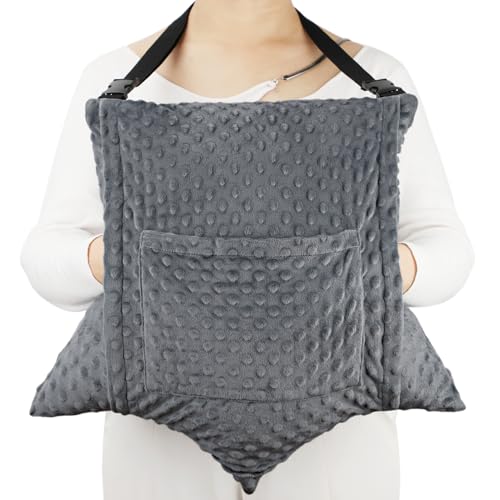
Heal n Hope Hands-Free Heart Pillow
Two adjustable straps hold it against your chest hands-free — the free hospital pillow needs both arms to hug it, which is exactly the effort sternal precautions ask you to avoid.
✓OSU Wexner Medical Center's own precautions sheet names "the heart pillow" by product name, instructing patients to hug it for coughing and every position change.
✓UW Medicine's occupational-therapy guide has patients hug a pillow with both hands to get in or out of bed, or move to standing or sitting — not just for coughing.
✓The listing's own copy doubles as a seatbelt cushion for the car ride home — also confirmed by a patient-community source (heart-valve-surgery.com), which is not a hospital source.
How we chose it: We checked two heart-pillow options — this is the one with hands-free straps, an upgrade over the hospital's basic hug-it-yourself design; the budget alt below is closer to what the hospital already gave you free.
One flaw (not a dealbreaker): Not something you need before the hospital gives you one at discharge — this is for the hands-free strap upgrade, or a second one, not a first purchase.
Because reaching behind your back for a clasp is exactly the motion sternal precautions rule out.
02The front-closure bra (women)
Leonisa Post-Surgery Wireless Bra with Front Closure
Hooks in front, no underwire — UW Medicine's own occupational-therapy handout names this exact need and rules out underwire by name.
✓UW Medicine: "Supports that close in the front are the easiest to get on and off... Underwire bras are not recommended because they can push on your wound."
✓Padded adjustable straps and a wide band under the bust — nothing wire-based pressing on the incision.
✓Sold by Leonisa for post-surgery wear, not for heart surgery by name — the front-closure, no-underwire design is what earns the recommendation here, not the seller's own framing.
How we chose it: This is a women-only pick, stated plainly — for men, or anyone who doesn't need it, UW Medicine's own guide says any button-front or zip-front top already works fine (see the note below); no new purchase needed there.
One flaw (not a dealbreaker): Hook-and-eye closure needs some hand strength — the zip-front alt below is easier one-handed if grip is limited by the weight restrictions.
Because the leg where a vein was harvested for the graft swells on its own — separate from your chest incision entirely.
03The compression stockings
Truform Knee-High Compression Stockings
Day-wear, off at night — University of Maryland Medical System's own patient page gives this exact instruction for the vein-harvest leg.
✓UMM Health: wear "elastic compression stockings (TED stockings)... during the day... Take them off at night to sleep."
✓15-20 mmHg graduated compression, unisex, a registered Class II medical device per the listing.
✓Good to know: these are OTC socks, not the same as a hospital-fitted true TED stocking — ask your surgical team before swapping if one was specifically prescribed.
How we chose it: We checked two compression-stocking options; this Truform pick is the OTC match to UMM Health's day-wear instruction — the JOBST alt below is the single most physician-recommended compression brand name in the US, per its own listing.
One flaw (not a dealbreaker): Not a substitute for a hospital-fitted TED stocking if your surgical team specifically prescribed one — check before swapping.
Because most heart-surgery patients go home with several new prescriptions, and a stiff two-handed pillbox lid is a real problem under a 10-pound arm limit.
04The pill organizer
EZY DOSE 7-Day Pill Organizer
One-handed, push-button lid — an Arthritis Foundation Ease-of-Use Commendation, per the listing, for exactly the weeks your grip is compromised by sternal-precaution limits.
✓Push-button, one-handed opening — matters during weeks of under-10-lb (both arms) or under-5-lb (one arm) restrictions.
✓Oversized compartments fit large tablets and fish-oil capsules without crowding.
✓Not medication content — this site doesn't name or dose any drug; the American Heart Association's own Cardiac Rehabilitation Medicine Tracker materials confirm medication complexity is a real, common concern after this surgery.
How we chose it: We checked two pill-organizer options; this is the one with a one-handed push-button lid — the budget alt below has the same 7-day AM/PM layout without it, a real trade for a few dollars less if hand strength isn't a concern.
One flaw (not a dealbreaker): A storage container, not a reminder system — it still relies on you or a family member to fill it correctly each week.
Because lying flat on your back for weeks is hard on a fresh sternotomy, and most people can't easily sleep any other way with a healing chest.
05The sleep wedge
Bekweim Adjustable Bed Wedge Pillow
Borrow a recliner first if you can — this is the buy-path if you can't.
✓One solid foam wedge, not a multi-piece set — less to arrange in week one.
✓The same wedge we recommend after shoulder surgery — the need (can't lie flat comfortably for weeks) is the same, and we checked it again for this surgery.
✓One caveat: no hospital source we read gives an explicit recliner/wedge recommendation for heart surgery specifically — this rests on the general can't-lie-flat pattern, not a direct hospital quote.
How we chose it: We verified one torso-incline wedge (plus a 3-piece alternative) — call this one vetted for the job, not the winner of a big field. It's the same wedge we recommend after shoulder surgery, because the shape need (a torso incline, not leg elevation) is the same.
One flaw (not a dealbreaker): No HCPCS code exists for a sleep-positioning wedge, so Medicare never pays toward it — same as everything else on this list.
Recovery tip: Two things you probably already own, so they're not cards above. Front-closing shirts: UW Medicine's own words say tops that close in front "can be buttoned or zipped halfway, then pulled over the top of your head like a T-shirt" — most people already own one. Comfortable walking shoes: OSU's and NHLBI's own guidance is to walk until tired, not to a distance goal — no hospital source calls for buying new shoes for this.
Depends on your stamina
Three more, each conditional and narrower than for knee or hip surgery — fatigue and standing-without-your-arms are the drivers here, not leg mobility.
Because UW Medicine's own words are 'if showering is hard or tiring for you' — fatigue, not a leg restriction, is the driver here.
Shower chair, hand-held head, non-skid mat
Medline Padded Shower Chair
A place to sit and push off from, not balance on — conditional on fatigue, not universal.
✓UW Medicine: your OT 'may suggest you use a shower chair, a hand-held shower head, a non-skid mat, and a bendable long-handled sponge' if showering is hard or tiring.
✓350 lb weight rating, height-adjustable to fit the stall.
Because standing up without pushing off with your arms is hard when a chair or toilet sits too low.
Furniture risers or a raised toilet seat
Sephyroth Adjustable Furniture Risers
Raises a chair, sofa, or bed 2 or 4 inches — the option for people whose real problem is a too-low chair, not just the toilet.
✓UW Medicine: your OT 'may suggest you use a higher bed, a pillow or foam cushion in your chair, or a raised toilet seat' specifically for patients who find it hard to stand without pushing off with their arms.
✓Screw-clamp risers lock onto a square or round leg and won't shift once weight is back on them.
Because sternal precautions restrict arm strain and overreaching — not bending, which is allowed here.
Reacher / grabber (optional)
Blue Jay 32" Reacher (2-Pack)
A narrower case than after knee or hip surgery — for dressing, not for an inability to bend.
✓UW Medicine: your OT 'may suggest' a long-handled reacher or dressing stick if it's hard to put on pants or underwear — arm-strain avoidance under the weight limits, not a bending substitute.
✓Good to know: sternal precautions do NOT restrict bending at the waist. UW Medicine explicitly allows briefly bending from sitting to reach socks or shoes — a difference from our knee and hip guides.
Recovery tip: If a vein was harvested from your leg for the graft, that leg swells on its own — separate from your chest incision. University of Maryland Medical System's guide says to keep it raised above heart height when you're sitting (a footrest or the arm of the couch works), get up once an hour to walk for a few minutes, and skip crossing your legs, which restricts the blood flow you're trying to protect.
💡
Recovery tip: When you do shower, skip harsh chemicals like hydrogen peroxide and skip loofahs, scrubbers, or washcloths on the incision — OSU Wexner Medical Center's own guide calls for gentle care only, for at least the first 12 weeks.
Borrow or skip
What this recovery doesn't need, according to the hospitals themselves.
The coverage record
None of the core items on a heart-surgery recovery checklist — the heart pillow, a front-closure bra, compression stockings, or a pill organizer — are billed through the Medicare durable medical equipment fee schedule this site tracks.
The 68 Medicare equipment codes this site tracks are all for leg or general-mobility equipment — none apply here. One caveat: Medicare-covered hospital beds with head elevation (E0250-E0266) are among those codes, and some patients struggle to sleep flat, but no hospital source we read recommends renting one for heart surgery. That link is our own, not a sourced recommendation. See the full breakdown on the sternal-precautions page.
Borrow a recliner first, and try it before you buy a wedge. Same advice as our other guides. No heart-surgery-specific study backs it (unlike the sleep-position research for shoulder surgery), so this rests on the general can't-lie-flat pattern.
Skip a walker, cane, or crutches unless your surgeon specifically prescribes one. No hospital source among the 6 we read mentions needing a mobility aid for heart surgery itself — unlike knee or hip, where leg mobility is the surgery's direct target. If balance or fatigue requires one, that's a conversation with your care team, not a shopping-list default.
A reacher is conditional, not universal, for this surgery specifically. Sternal precautions restrict arm strain and overreaching — not bending, which is allowed here. See the note on the card above.
OTC compression stockings aren't an automatic substitute for a hospital-fitted TED stocking if your surgical team specifically prescribed one — ask before swapping.
If a recliner or wedge isn't an option because you can't sleep semi-upright at all, ask your doctor whether a semi-electric hospital bed with head elevation — which Medicare does cover with a prescription — makes sense. No hospital source we read recommends one as a first step; treat this as a doctor's-office conversation, not a primary recommendation.
Go deeper
Two follow-up pages cover what comes up next for this surgery specifically — the precaution rules in full, and the practical day-to-day setup.
This is an equipment and cost-coverage guide, not medical advice. It doesn't cover cardiac rehabilitation, medication management, wound care, or any other instruction that should come from your surgeon or care team — follow their discharge instructions over anything here. Weight limits, driving restrictions, and the full recovery timeline vary by incision type (sternotomy vs. thoracotomy vs. transfemoral) and surgeon.
See the full printable checklist — all 12 items ↓
Everything on this page, in one list — what the hospital gives you, the five essentials, the three situational picks, and what to skip. This is what prints when you use the button up top.
The full heart-surgery recovery checklist
Item
Category
Status
Heart pillow (basic, firm)
Provided
Hospital-provided
Heart pillow, hands-free strap upgrade
Essential
Buy
Front-closure bra, no underwire (women)
Essential
Buy
Compression stockings (vein-harvest leg)
Essential
Buy
Weekly AM/PM pill organizer
Essential
Buy
Torso-incline sleep wedge
Essential
Borrow recliner first
Shower chair, hand-held head, non-skid mat
Depends on your situation
Buy, if tiring/hard
Furniture risers or raised toilet seat
Depends on your situation
Buy, if hard to stand
Reacher / grabber
Depends on your situation
Optional
Walker, cane, or crutches
Borrow or skip
Skip by default
Front-closing shirt (any gender)
Nothing new to buy
Already own one
Comfortable walking shoes
Nothing new to buy
Already own
Why isn't there a separate Medicare page?
None of the 68 Medicare DME codes this site tracks apply to a heart pillow, a front-closure bra, compression stockings, or a pill organizer — the same story as after shoulder surgery: no coverage.
Because the coverage story and the sternal precautions story are really one story here — what the hospital gives you, and what it doesn't bill for — we cover both on one page instead of a separate Medicare page. See the full breakdown, including the hospital bed note, there.
This page has Amazon links — we may earn a commission if you buy through them, at no extra cost to you. It never changes which product we recommend. See our methodology.
Amazon product listings — We check each Amazon price and whether it is in stock every night. A price only shows if it was checked in the last 24 hours.