Because the CO2 gas used in laparoscopic and robotic surgery causes a gas-and-shoulder ache that ordinary painkillers don't fully touch.
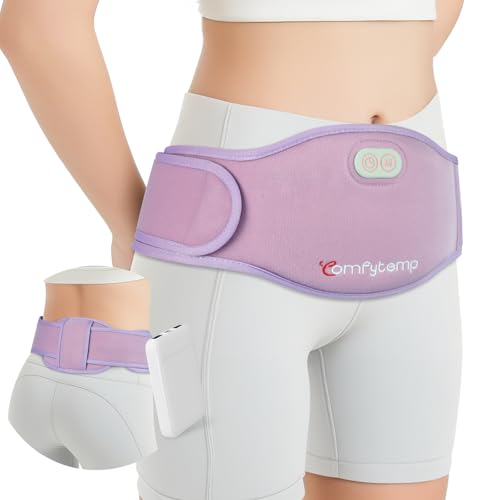
Comfytemp Cordless Heating Pad
Cordless and rechargeable, so there's no cord to manage while you're up and moving — wraps around the waist to stay over the incision and gas-pain area.
- Cleveland Clinic's own minimally invasive gynecologic surgery team, in its discharge instructions: "You may experience gas pain, abdominal swelling, or shoulder pain for 24-72 hours after surgery... A warm shower, heating pad, and/or walking may help."
- An independent OB-GYN practice states the same thing separately, in its own discharge instructions: "Rest and use a heating pad."
- 3 heat levels and a 15/30/45-minute auto-shutoff timer — addresses the fall-asleep-with-it-on risk.
How we chose it: Two independent hospital/physician sources — a Cleveland Clinic surgical team and an independent OB-GYN practice — both point at a heating pad, specifically for the CO2-gas mechanism, not just general soreness.
One flaw (not a dealbreaker): This specific gas-and-shoulder-pain mechanism is tied to laparoscopic and robotic surgery, which use CO2 gas — it doesn't apply the same way to open-abdominal or vaginal-only hysterectomy, which don't use gas. It still helps with ordinary incisional soreness either way.