What to Buy Before Bariatric Surgery: The 6 Essentials

Gastric sleeve or gastric bypass — the same staged recovery, so this is one checklist for both. Here’s exactly what to get, and what we deliberately didn’t sell you.

Of the 270,089 bariatric surgeries done in the U.S. in 2023, sleeve gastrectomy and gastric bypass together made up 81.6% of them (157,254 and 63,132) — the two procedures this hub covers as one checklist, because the hospitals that publish these guides treat them as one recovery, not two. Six things cover what actually gets hard: measuring small meals, blending food, getting pills down, and easing incision and gas pain. Plan on roughly $140–145 for those six, as of August 2026 (always check current prices on Amazon) — and a seventh pick, a straw-free water bottle, gets its own section below, because straws are a real, unconditional no here.

Every pick here traces to a hospital diet guide, discharge instruction, or Medicare’s own coverage policy — how we choose →

Why one hub for sleeve and bypass, not two: Columbia Surgery’s own diet guide is titled to cover proximal gastric bypass, banded gastric bypass, and sleeve gastrectomy — one staged protocol, not two. Mayo Clinic’s own bypass-titled diet page states outright that it “helps people who are recovering from sleeve gastrectomy, gastric bypass surgery… and other bariatric surgeries.” UCSF Health’s recovery page never differentiates by procedure at all. And University of Rochester Medicine’s own head-to-head comparison — a page built specifically to contrast the two — says recovery for “gastric bypass or sleeve surgery is fairly low” with “no activity restrictions” either way. The one real difference: gastric bypass reduces nutrient absorption more than sleeve does, so a bypass patient’s lifelong vitamin routine is typically watched more closely — that fact lives inside our vitamin disclosure below, not a second checklist.

The 6 essentials

Because your stomach measures meals in tablespoons now, not cups — for weeks.

Portion-control containers

Nafhone 3-Pack Bariatric Meal Prep Containers, 8oz Glass, Two 4oz Compartments

Two 4oz compartments per container — close to Mayo Clinic’s own blended- and soft-stage portion sizes.

  • Mayo Clinic, verbatim: “Each meal should consist of 4 to 6 tablespoons of food” at the blended stage, and “one-third to one-half cup of food” once you’re on soft food.
  • Columbia Surgery’s own combined diet guide caps pureed servings at “No more than 2 ounces of a pureed food every 2 - 3 hours.”
  • UCSF Health: “Measure portions. Eat small amounts every one to two hours in the early postoperative period.”
  • Glass, dishwasher- and microwave-safe — reheat a small meal without dirtying another dish.

The count: This is equipment, not a diet plan — we don’t author meal or recipe content here. Four hospital sources (Mayo, UCSF, Columbia, Baptist) each independently describe the same small-and-frequent structure, in their own numbers; a pre-measured container just removes the by-eye guesswork those numbers ask for in the first weeks.

Honest disclosure: No live product photo this pass — see Sources for why.

Also good for batching a week at once: the 12-pack single-compartment set ($14.99)

Hamilton Beach Go Sport Portable Blender for Smoothies, 20 oz.

Because you're looking at weeks of blended and pureed food, not days.

The personal blender

Hamilton Beach Go Sport Portable Blender for Smoothies, 20 oz.

The blending jar doubles as the cup you drink from — one less dish to manage.

  • Mayo Clinic describes the blended stage as foods "strained and blended, or mashed up... the consistency of a smooth paste."
  • Columbia’s own combined diet guide lists "pureed food and liquids... high in protein" for the second and third week home.
  • Baptist Health’s independent sleeve-only timeline names "soft and pureed foods" as its own stage too — same structure, different week count.

The count: This is equipment, not a diet plan — every specific food or texture named above is a direct quote from a hospital's own published diet guide, not this site's invention.

One flaw (not a dealbreaker): Entirely optional if you already own any blender — this is here for anyone who doesn't.

Because Columbia’s own guide says a pill bigger than the tip of your pinkie can’t be swallowed until a week after surgery.

The pill crusher

Deke Home 3-in-1 Pill Cutter & Crusher with Storage

Not a dose-scheduling organizer — a physical crusher/splitter, for pills too big to get down right now.

  • Columbia Surgery, verbatim: “Whole pills/capsules until you can tolerate soft solid food. Pills/capsules that are smaller than the tip of your pinkie can be swallowed one week after surgery. Crush pills or open capsules and add to food or beverage.”
  • 3-in-1 design — crusher, splitter with a stainless blade, and a storage/travel cup in one compact piece.

The count: Same underlying need this pick already solves on this site’s hiatal-hernia hub — a surgically reduced stomach or esophagus can’t safely pass a large whole pill in the first stretch of recovery, whichever surgery caused it.

Honest disclosure: No live product photo this pass — the same Amazon access block that limited this site’s earlier hiatal-hernia build also prevented reliably confirming which image is the real product photo, not a carousel thumbnail. Price and stock ($6.99, in stock) were independently re-verified live 2026-08-06.

Frida Mom Belly Binder, Postpartum Essentials for Natural and C-Section Recovery, Adjustable Compression Wrap, After Birth Brace, Abdominal Band, 9" High

Because nerve endings healing near your incisions can cause a shooting, electrical feeling — a binder helps with that specifically.

The abdominal binder

Frida Mom Belly Binder, Postpartum Essentials for Natural and C-Section Recovery, Adjustable Compression Wrap, After Birth Brace, Abdominal Band, 9" High

A genuinely different reason than this site's c-section use of the same pick — nerve-healing sensation, not fluid or incision support.

  • UCSF Health, verbatim: "Shooting electrical sensations within the skin, which often occur as nerve endings heal... Wearing an abdominal binder can help minimize this symptom."
  • Three-point adjustable strap, not a single one-piece band — tighten more over the incision line, looser everywhere else.
  • Fits waist sizes 29"–46".

The count: Reused from this site's c-section-recovery hub, where the same binder is recommended for a different reason (fluid/incision support, per Cleveland Clinic) — UCSF's bariatric-specific page gives a genuinely different mechanism, so we're not reusing that hub's copy verbatim, just the pick.

One flaw (not a dealbreaker): Marketed for postpartum/c-section recovery, not bariatric surgery by name — the nerve-healing sensation UCSF describes is a general post-abdominal-surgery phenomenon, not procedure-specific.

D. Cozy Hysterectomy Pillow Abdominal Surgery Seatbelt Pillows with Pocket, C-Section Recovery

Because a cough or sneeze without support can be sharp and scary near a fresh incision.

The cough-splint pillow

D. Cozy Hysterectomy Pillow Abdominal Surgery Seatbelt Pillows with Pocket, C-Section Recovery

Hold it against your abdomen when you cough — UCSF's own instruction.

  • UCSF Health, verbatim: "Cough from your abdomen, not your throat. Hold a pillow against your abdomen for support."
  • Straps or sits against the belly under a seatbelt or waistband, so pressure on the car ride home lands on padding, not the incision.
  • Side zipper adjusts the stuffing to fit your size.

The count: Same pick and same cough-splint rationale this site's hernia hub already established for a different abdominal surgery — the need (protecting a fresh abdominal incision from cough or seatbelt pressure) isn't procedure-specific.

One flaw (not a dealbreaker): Marketed for hysterectomy and general abdominal surgery, not bariatric surgery by name — the mechanism UCSF describes is the same regardless.

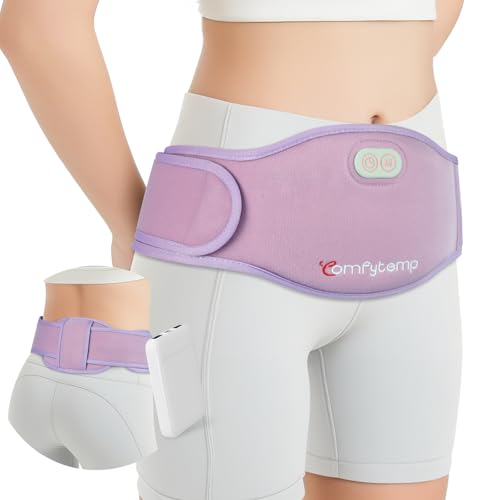
Comfytemp Portable Belly and Back Heating Pad, Cordless, Rechargeable

Because the ache that surprises people isn't at the incision — it's your shoulder, from the gas used to inflate your abdomen.

The heating pad

Comfytemp Portable Belly and Back Heating Pad, Cordless, Rechargeable

Two real reasons to have one: general incision soreness, and referred shoulder pain from surgical gas.

  • UCSF Health, verbatim: "Some patients also experience neck and shoulder pain, which occurs when the body reabsorbs the gas used during surgery."
  • Cordless and rechargeable, 3 heat levels, 15/30/45-minute auto-shutoff timer.
  • UCSF's own safety caveat: be careful not to burn skin that's temporarily numb near a healing incision.

The count: This site's other hubs reuse this same pick for incision soreness (c-section, hernia); this hub adds a second, UCSF-sourced rationale — referred shoulder pain from laparoscopic gas — not previously documented for this pick.

One flaw (not a dealbreaker): Shaped for the belly and back, not the shoulder — it drapes over the shoulder fine, but a flatter, wrap-style pad would fit more precisely.

Hydration — skip the straw

Two independent hospital sources, two separate mechanisms, zero disagreement — this gets its own section instead of a buried bullet.

“Drinking with a straw”

— UCSF Health, named as a specific cause of vomiting

“Avoid drinking with a straw, which can also be a contributing factor.”

— UCSF Health, named again, independently, as a contributing factor to gas and bloating

“Straws for drinking”

— Columbia Surgery’s own combined diet guide, listed flatly under “Avoid,” no qualifier

A patient whose stomach has just been surgically reduced is at real risk from the extra air a straw introduces — both the vomiting-risk mechanism and the gas-bloat mechanism apply here, from two independent sources. This site’s own straw-lid bottle (built for tonsillectomy, where straws are fine per some hospitals) is the wrong fit here — we located and confirmed a genuinely straw-free alternative instead, by reading the listing’s own feature-bullets copy directly, not just its title.

Because a stomach reduced to a fraction of its size doesn’t need any extra swallowed air.

Hydration bottle, no straw

Aqulea Glass Water Bottle, 32oz, with Time Marker and Silicone Sleeve (No Straw)

Glass, wide-mouth, bamboo screw lid — straw-free by construction, not a straw-lid bottle we’re asking you not to use.

  • UCSF Health’s own hydration instruction, with zero straw mention: “Buy a reusable bottle, bring it everywhere, and sip water all day.”
  • Time markers on the side match that “sip all day” instruction, without this site inventing an hourly ounce target.
  • Mayo Clinic’s own daily fluid target: “Drink 64 ounces of fluid a day, to avoid dehydration.”
  • Dishwasher safe.

The count: We confirmed this bottle is straw-free by reading its own feature-bullets copy directly, not just its title — a genuinely straw-free bottle by construction, not a straw-lid bottle we’re simply choosing not to mention.

Honest disclosure: No live product photo this pass — the mobile-browser fetch used to verify stock and price doesn’t reliably expose a stable full-resolution image URL. Price and stock ($19.99, in stock) were independently re-verified live 2026-08-06.

What we didn't ship, and why

The honesty section — a real coverage requirement we won't sell you a product for, one category we checked and rejected, and what's out of scope entirely.

Lifelong vitamins: a hospital instruction AND a Medicare coverage requirement — no product here

Three independent hospital sources, fetched live, all say the same thing:

“2 children’s or 1 adult chewable multi-vitamin with minerals tablet(s) every day.”

— Columbia Surgery’s own combined diet guide

“Take recommended vitamin and mineral supplements… You’ll likely need to take a multivitamin supplement every day for the rest of your life.”

— Mayo Clinic

“you will take a daily bariatric-specific multivitamin, which has added iron”

— UCSF Health

This isn’t just hospital advice — Medicare’s own Local Coverage Determination (L35022) lists “lifetime postoperative care for dietary issues (including vitamin, mineral and nutritional supplementation)” as a condition tied to coverage, not a suggestion. This site does not sell or recommend a specific bariatric vitamin — the search result for “bariatric vitamins” is dominated by vitamin-seller sites with an obvious conflict of interest. Ask your surgical team, who's also best positioned to help you sort that search result out. One honest, attributed note on the one real sleeve-vs-bypass difference: because gastric bypass reroutes the small intestine and reduces nutrient absorption more than sleeve does, a bypass patient’s vitamin routine is typically monitored more closely — per University of Rochester Medicine’s own comparison page — not a different product, just closer follow-up.

Torso sleep wedge: checked and rejected

This site’s hiatal-hernia hub shipped a torso sleep wedge on a weak, pre-op-framed citation. This hub checked the same question directly and found nothing to ship: across all six hospital and academic sources fetched this pass (Columbia, Mayo, UCSF, University of Rochester, Baptist, ASMBS), zero mention sleep position, elevation, or a wedge at all for bariatric-surgery recovery. UCSF’s page, the most equipment-detailed source found, covers “difficulty sleeping” as a common symptom and the first-night hospital mobility routine in detail, but never once addresses how to sleep once home. Disclosing “no source found” here, honestly, rather than reusing another hub’s pick by inertia.

Incentive spirometer: hospital-issued, nothing to buy

UCSF Health: “you’ll be shown how to use an incentive spirometer to help expand your lungs” — given to you at the hospital, the same honest no-new-purchase finding this site has already documented on its appendectomy and colorectal-ostomy hubs.

  • Stool softener / Miralax is out of scope here. UCSF names Miralax by brand for bowel motility — a medication, not a shopping decision for this site. Ask your surgeon or pharmacist.
  • Anti-nausea medication is out of scope here. UCSF names the drug class (antiemetics) and is explicit that it should be taken “only as prescribed by your surgeon” — a prescription, not a product this site recommends or links.

Go deeper

Two follow-up pages: the real coverage asymmetry between sleeve and bypass, and every hospital's own staged diet, side by side.

This is an equipment and cost-coverage guide, not medical advice. It doesn't cover surgical technique, medication, dosing, or the specific diet, activity, or follow-up instructions that apply to you — those should come from your surgical team, not this page.
See the full printable checklist — all 12 items ↓

Everything on this hub, in one list — the 6 essentials, the hydration pick, and every category we checked but didn’t ship a product for, and why. This is what prints when you use the button up top.

The full bariatric-surgery recovery checklist
ItemCategoryStatusMedicare
Portion-control containers Essential Buy No HCPCS code
Personal blender Essential Buy (skip if you own one) No HCPCS code
Pill crusher / splitter Essential Buy No HCPCS code
Abdominal binder Essential Buy No HCPCS code
Cough-splint / seatbelt pillow Essential Buy No HCPCS code
Heating pad Essential Buy No HCPCS code
Hydration bottle, no straw Hydration Buy No HCPCS code
Lifelong multivitamin/mineral supplement Required, not sold here Ask your surgical team — no brand recommended Coverage condition, not DME-billed
Incentive spirometer No purchase needed Hospital-issued n/a
Torso sleep wedge Checked & rejected No hospital source found n/a
Stool softener / Miralax Out of scope Ask your surgeon/pharmacist Medication — out of this site's scope
Anti-nausea medication Out of scope Prescribed by your surgeon Medication — out of this site's scope
What Medicare actually pays for

Roux-en-Y gastric bypass has been covered by Medicare since February 2006. Laparoscopic sleeve gastrectomy — the more common of this hub's two procedures — was added later and more conditionally: since June 2012, Medicare Administrative Contractors may cover it at their own discretion, not automatically.

None of this hub's seven recovery-equipment picks has a Medicare DME billing code — bariatric surgery isn't a mobility-limiting procedure the way a joint replacement is, so there's no bathroom or walking-aid checklist behind it. See the full coverage breakdown, including one contractor's real documentation and prior-authorization burden.

Source: CMS NCD 100.1 (Bariatric Surgery for Treatment of Co-Morbid Conditions Related to Morbid Obesity) + LCD L35022 (Novitas Solutions)

See the full coverage asymmetry and documentation burden →

This page has Amazon links — we may earn a commission if you buy through them, at no extra cost to you. It never changes which product we recommend. See our methodology.

Sources

  1. Columbia University Irving Medical Center, "Post Bariatric Surgery Diet Guide: Proximal Gastric Bypass, Banded Gastric Bypass And Sleeve Gastrectomy" — the anchor source for the one-hub verdict; diet-stage, straw, pill-crushing, and multivitamin citations; fetched live 2026-08-06
  2. Mayo Clinic, "Gastric bypass diet: What to eat after the surgery" (reviewed June 28, 2025) — states it serves sleeve patients too; portion-size, hydration-target, and multivitamin citations; fetched live 2026-08-06
  3. UCSF Health, "Recovering from Bariatric Surgery" — the richest equipment/restriction source found this pass; straw, shoulder-pain, cough-splint, abdominal-binder, and multivitamin citations; fetched live 2026-08-06
  4. University of Rochester Medicine (Highland Hospital), "Gastric Bypass vs. Sleeve" (Mar. 3, 2026) — the no-activity-restriction-difference and malabsorption-divergence citations; fetched live 2026-08-06
  5. Baptist Health, "Gastric Sleeve Diet: Pre-Op and Post-Op Guidelines" — independent sleeve-only diet-stage timeline; fetched live 2026-08-06
  6. American Society for Metabolic and Bariatric Surgery, "2025 Fact Sheet — Metabolic and Bariatric Surgery Overview" — the 270,089-procedure 2023 volume stat (sleeve 157,254, bypass 63,132) — PDF fetched and table visually verified 2026-08-06
  7. CMS National Coverage Determination 100.1, "Bariatric Surgery for Treatment of Co-Morbid Conditions Related to Morbid Obesity" (v5, effective 09/24/2013) — the sleeve-vs-bypass coverage asymmetry; fetched live 2026-08-06
  8. CMS Local Coverage Determination L35022, "Bariatric Surgical Management of Morbid Obesity" (Novitas Solutions, effective 05/13/2021) — a regional documentation-burden example, not a national rule; fetched live 2026-08-06
  9. data/coverage_status.json (68 HCPCS codes) + data/dmecs_products.json + data/recalls.json — checked directly for bariatric/gastric/sleeve/bypass — the DMECS 438-hit "bariatric" match is a false positive (heavy-duty walkers/rollators, unrelated to this hub) and is not cited above as bariatric-surgery equipment
  10. Amazon product-page live verification (scripts/verify_asin.py, curl + mobile Safari UA) — all 6 core-essentials ASINs plus the hydration-bottle ASIN independently re-verified live 2026-08-06 by this build — every pick confirmed LIVE and In Stock
  11. VerifiedCareData dataset.json (CC-BY-4.0) — every coverage fact above in one machine-readable endpoint